In a significant shift for Montana’s political landscape, President Trump endorsed former federal prosecutor Kurt Alme on Wednesday to succeed Senator Steve Daines, who simultaneously announced he would not seek reelection this November. Trump praised Alme on Truth Social as a “highly respected” Harvard Law graduate and a veteran of his administration. The President emphasized Alme’s commitment to law and order, his support for the military, and his alignment with “America First” economic and border policies.
The President’s endorsement highlighted Alme’s past service as a U.S. Attorney during both the Trump 45 and Trump 47 administrations. Trump noted that Daines, whom he credited with doing an exceptional job, had personally recommended Alme as his successor. This high-level backing is further bolstered by support from Montana Governor Greg Gianforte and Senator Tim Sheehy, signaling a unified Republican front behind Alme’s candidacy.
The timing of the announcement was particularly notable, as Trump’s official endorsement was made just an hour after the candidate filing deadline in Montana had closed. This sequence of events followed Daines’ own decision to “pass the torch” to Alme, a move that traces back to Daines’ initial recommendation of Alme for the U.S. Attorney role years prior.
Alme brings a diverse professional background to the race, having been unanimously confirmed as a U.S. Attorney in 2017 before serving until late 2020. Since then, he has held key positions including state budget director for Governor Gianforte and executive vice president at the National Christian Foundation. In a statement, Alme pledged to be a “relentless advocate” for Montana, focusing on public safety and the economic results delivered under the President’s policies.
Responding to the endorsement, Alme emphasized the need for “proven doers” in Washington who will defend conservative values without apology. He framed his campaign as a mission to help President Trump implement his national agenda while prioritizing the specific needs of Montanans. Alme’s entry into the race positions him as the clear frontrunner to maintain the seat for the Republican party.
For his part, Senator Daines shared his decision through a social media video, stating it came after “much careful thought.” Reflecting on his transition from 28 years in the private sector to a fulfilling career in public service, Daines expressed that he is energized and ready for his next chapter. His departure marks the end of a prominent tenure in the Senate, paved by his confidence in Alme’s ability to represent the state.
An announcement👇 pic.twitter.com/7HCofBTUMA
— Steve Daines (@SteveDaines) March 5, 2026
The Montana Republican joins a growing list of lawmakers opting to forgo reelection bids in this year’s midterm cycle. Senator Steve Daines announced his decision not to run just one day after Representative Ryan Zinke also revealed his retirement from Congress. Zinke, a former Navy SEAL, disclosed that he has undergone several surgeries “quietly” since early 2023 for injuries sustained during his military service. These health challenges have hampered his ability to participate in House votes and will require further surgical procedures in the coming months.
Zinke explained that his choice to step down was rooted in his desire to ensure Montana maintains “full-time representation in Congress.” He expressed a wish to avoid the risks associated with uncertain absences or missed votes during a critical legislative period. To fill his seat, Zinke joined President Trump in endorsing local Montana radio host and combat veteran Aaron Flint as his preferred successor, framing Flint as the next generation of leadership the state requires.
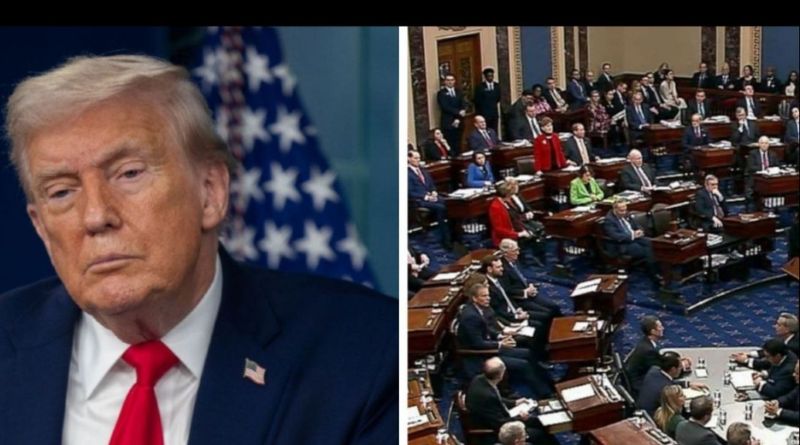
On Wednesday, Senate Republicans took a firm stand by blocking a resolution intended to curb President Trump’s authority to conduct military operations in Iran. The measure, introduced by Senator Tim Kaine (D-VA), would have required the administration to seek explicit congressional approval for continued military action. The vote followed days of intense speculation regarding whether enough Republicans would break ranks to join Democrats in a public rebuke of the President’s war powers.
The Senate ultimately rejected the resolution after a significant lobbying effort by the Trump administration to build support for “Operation Epic Fury.” Administration officials conducted multiple briefings for lawmakers to justify the ongoing military campaign as a matter of national security. Despite these efforts, Senator Rand Paul (R-KY) was the only Republican to vote in favor of the resolution, while Senator Jon Fetterman (D-PA) stood as the lone Democrat to vote against it, siding with the Republican majority.
During the debate, several GOP senators argued that the War Powers Act represents an unconstitutional shift of authority away from the Commander in Chief. They maintained that Congress’s primary role in such conflicts is to manage funding rather than micro-manage military strategy. Advocates for the administration’s position insisted that the current operations are essential for dismantling Iran’s ability to threaten global security with its conventional and nuclear ambitions.
The defeat of the resolution is seen as a major legislative victory for the White House as it continues its high-stakes campaign in the Middle East. While Democrats argued that the President was bypassing constitutional checks and balances, the majority of the Senate remained convinced by the administration’s arguments regarding “imminent threats.” This outcome ensures that, for the time being, the President maintains broad discretion over the scope and duration of Operation Epic Fury.