White House Ceremony Spares Gobble and Waddle While Reviving Old Feuds in Annual Thanksgiving Ritual
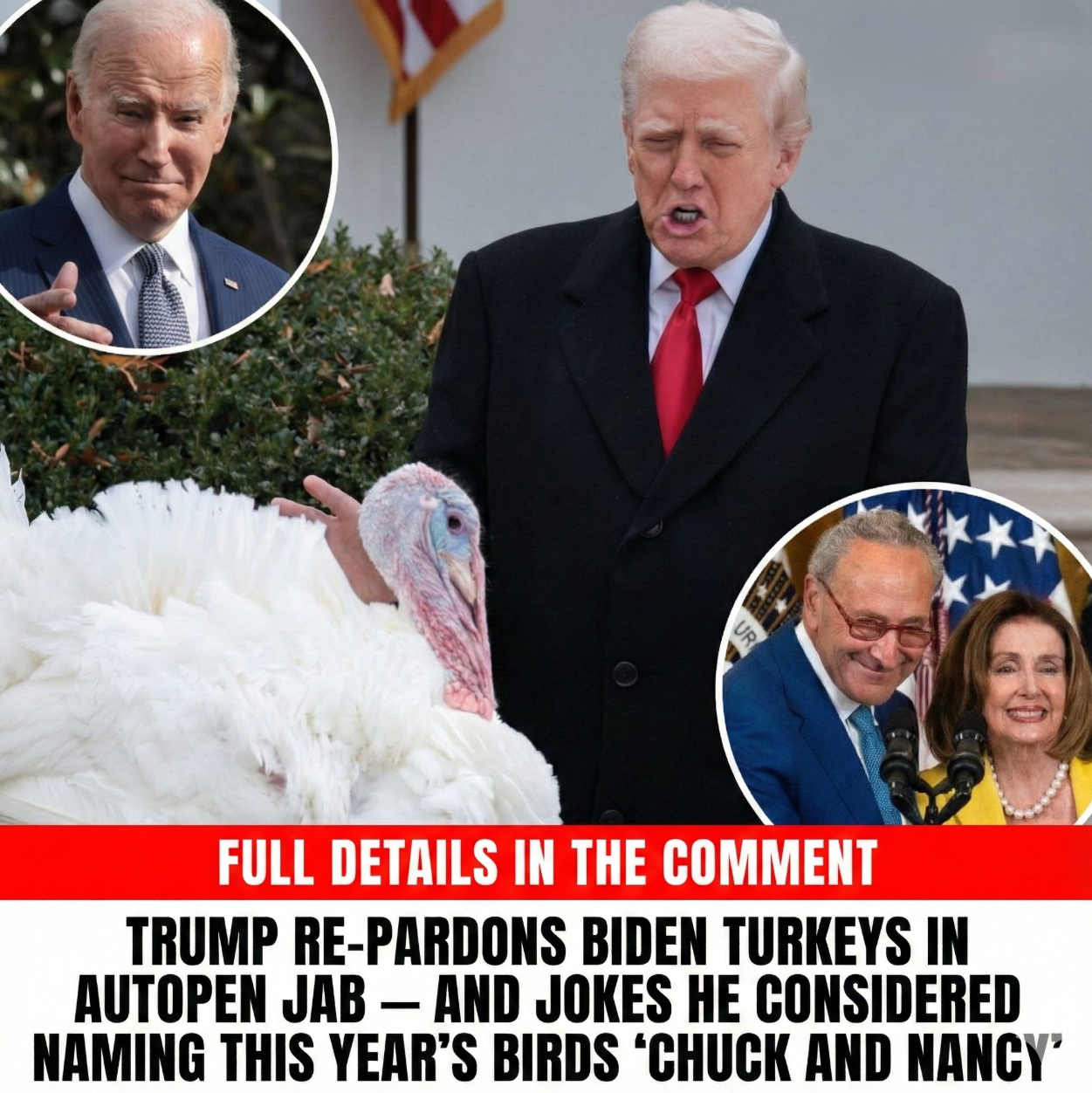
Under the crisp November sun filtering through the branches of the White House Rose Garden, President Donald Trump stood before a small gathering of aides, reporters, and wide-eyed children from a nearby school, his signature red tie catching the light as he cradled a microphone with familiar ease. It was November 25, 2025, and the air carried the faint scent of autumn leaves mingled with the earthy presence of two oversized birds fidgeting on a bed of hay. For the 78th time in modern tradition, the nation tuned in to watch the commander-in-chief spare a pair of Thanksgiving turkeys from the dinner table—a lighthearted ritual that has blended whimsy with White House pomp since the days of Harry Truman. But as Trump gripped the podium, his words quickly veered from avian mercy to the sharper edges of political theater, rekindling old rivalries with a quip about Senate Minority Leader Chuck Schumer and former House Speaker Nancy Pelosi. “I considered naming them Chuck and Nancy,” he said with a grin that drew chuckles from the crowd, “but I would never pardon those two.” In a ceremony that lasted just minutes but echoed for hours online, Trump not only granted clemency to this year’s feathered duo, Gobble and Waddle, but also dramatically “re-pardoned” last year’s survivors, declaring their previous reprieve under President Joe Biden utterly void. For families across America tuning in from living rooms heavy with the aroma of roasting sides, the moment offered a fleeting pause—a reminder of simpler joys amid the relentless churn of headlines.
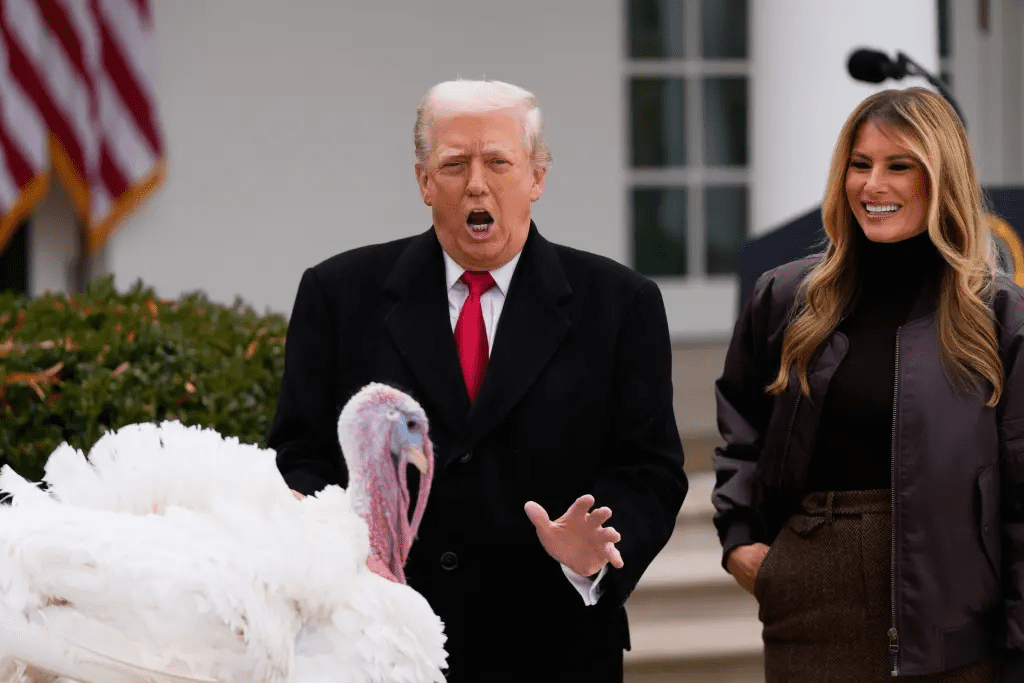
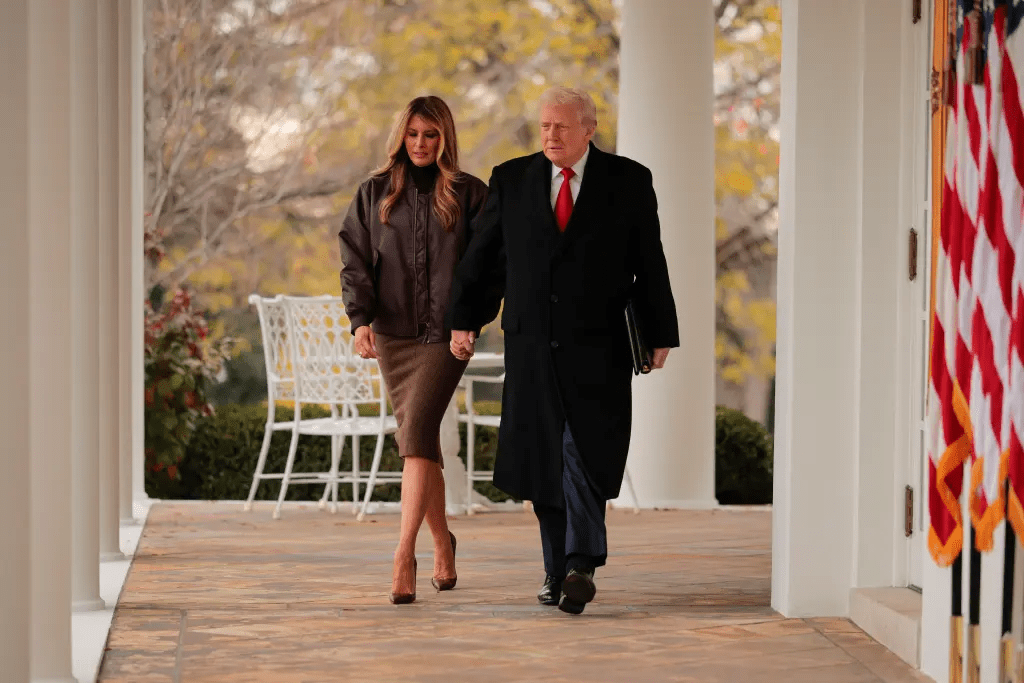
The turkey pardon, a staple of the holiday season that has evolved into a quirky emblem of presidential levity, traces its roots to the mid-20th century, when practical gifts from farmers gave way to symbolic gestures of goodwill. It began informally in 1947, when Truman accepted a flock from the National Turkey Federation amid the post-World War II poultry boom, reportedly quipping that the birds were “too tough for the table.” By the 1960s, under Lyndon B. Johnson, the act formalized into an annual event, with the president publicly sparing one or two turkeys raised on Midwestern farms and destined for the White House menu. Over decades, it became a bipartisan touchstone: Ronald Reagan joked about his press secretary’s fate in 1987, George W. Bush quipped about the birds’ “fowl play” in 2005, and Barack Obama let his daughters name the pardonees in 2010. For Trump, now in his second non-consecutive term, the ceremony marked a return to a tradition he first embraced in 2017, infusing it with his unfiltered style—part showmanship, part settling of scores. This year’s event, held in the Rose Garden’s golden-hour glow, unfolded against a backdrop of crimson roses and American flags, with Gobble and Waddle peering curiously from their enclosure, their white feathers ruffled by a gentle breeze.
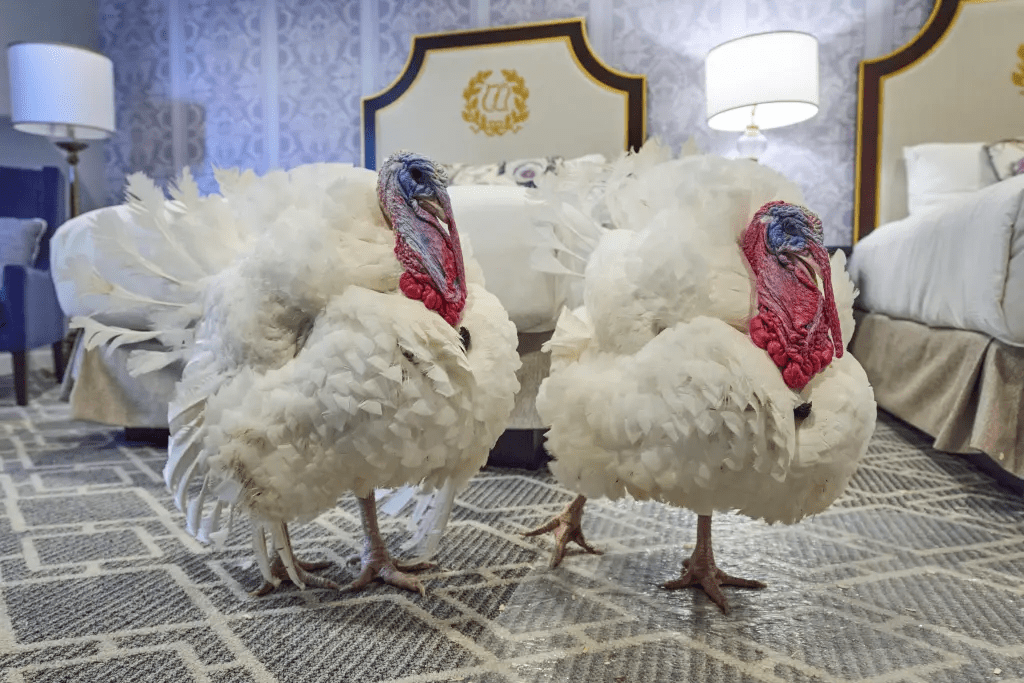
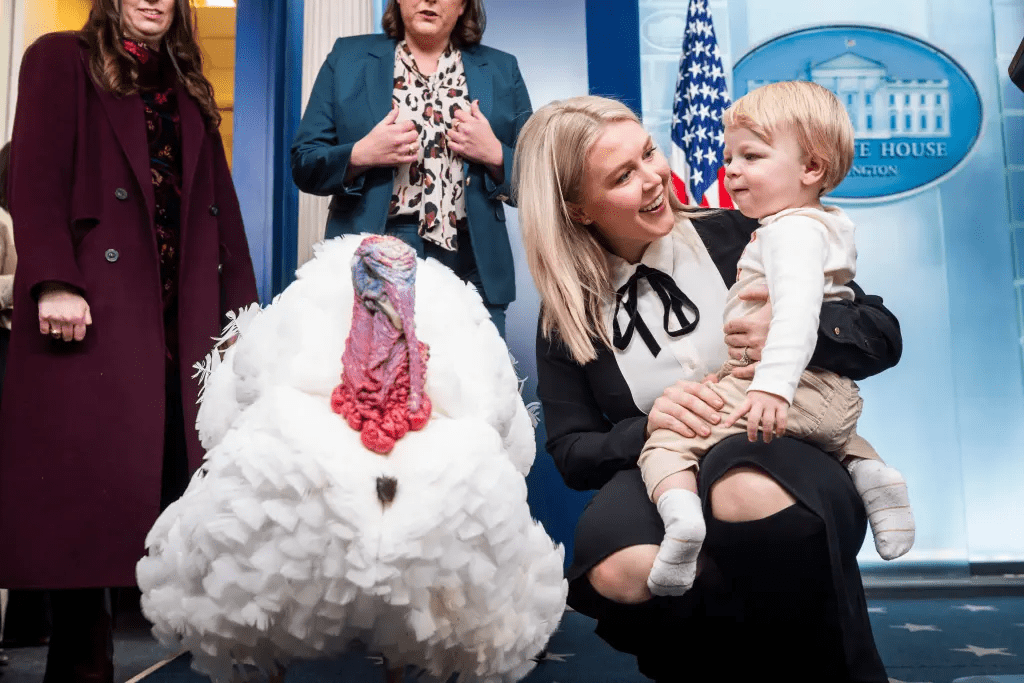
The turkeys themselves, hailing from a family farm in Mount Olive, North Carolina, embodied the wholesome Americana the ritual evokes. Raised by fifth-generation farmer John Sudduth, the pair—Gobble tipping the scales at 52 pounds and Waddle at 50—arrived in Washington via a specially equipped crate, complete with climate control and hay bedding to ease their journey. Selected through a rigorous process by the National Turkey Federation, they were certified as the first “Make America Healthy Again” birds by Health and Human Services Secretary Robert F. Kennedy Jr., who touted their diet of grass-fed beef supplements and organic grains as a nod to nutritional reform. Earlier that morning, Waddle made a solo appearance in the White House briefing room, strutting under the lights as Press Secretary Karoline Leavitt introduced him with a smile, drawing coos from staffers who snapped photos on their phones. Gobble, the more vocal of the two, gobbled softly during the ceremony, prompting laughter from the schoolchildren seated front row, their eyes wide with the magic of seeing history unfold. For handlers like Sudduth, who traveled from North Carolina to witness the pardon, moments like these carry deep personal weight. “These birds represent hard work on the farm—generations of it,” he shared afterward, his calloused hands gently adjusting Waddle’s perch. “Seeing them get a second chance, it’s a small thing, but it means the world to folks back home.”
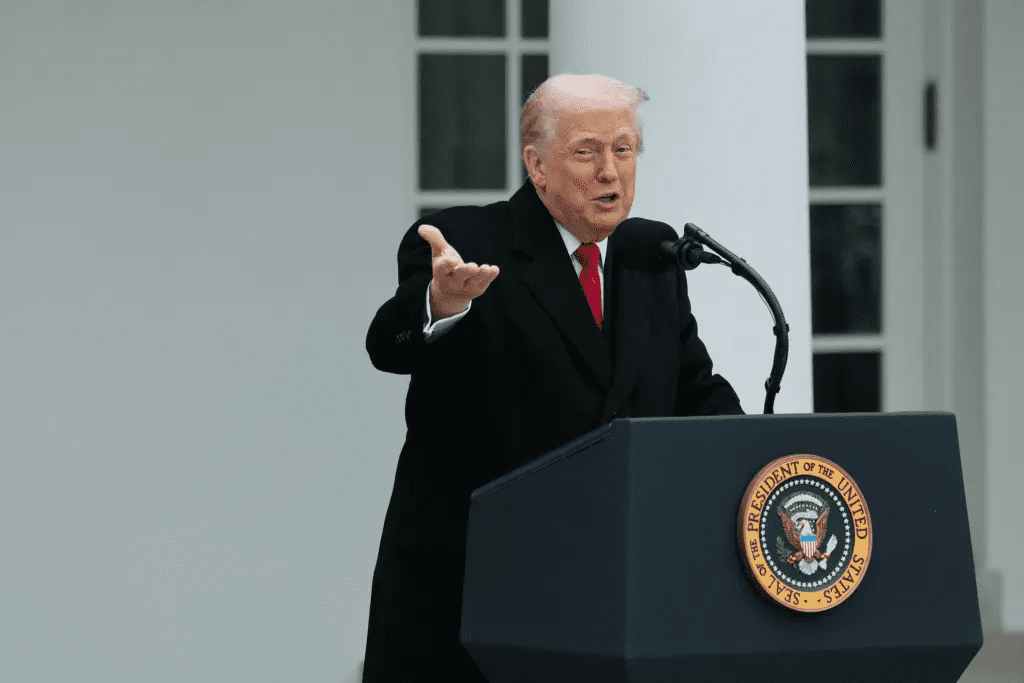
Trump’s remarks, delivered with the rhythmic flair of a rally speaker, wove mercy for the birds with boasts about his administration’s early wins. He opened by praising the economy’s rebound, claiming turkey prices had plummeted 33 percent since his inauguration—a figure his team attributed to deregulation and supply chain tweaks, though independent trackers pegged the drop closer to 16 percent for the holiday bird alone. “Our country is doing really well economically, like we’ve never done before,” he said, gesturing broadly as if addressing a stadium crowd rather than the intimate garden gathering. He touted a sweeping Republican tax and spending package passed in October, dubbing it “four years—actually probably eight or 10 years—worth of material into one great, big, beautiful bill.” Immigration took center stage too, with Trump crediting National Guard deployments to urban areas, including the capital, for curbing crime waves that had plagued cities under prior leadership. The words landed with a mix of applause from supporters and polite nods from the press pool, a microcosm of the divided audience watching live on C-SPAN and streaming apps.
But it was the jabs at his predecessor that stole the show, turning the pardon into a retrospective roast. Trump zeroed in on the 2024 turkeys, Peach and Blossom, spared by Biden via an autopen signature—a mechanical stand-in for the president’s hand that Trump dismissed as fraudulent. “Last year’s turkey pardons are totally invalid,” he declared, his tone laced with mock outrage. “They were done with the autopen, which Joe Biden used illegally—everything he did was with the autopen.” He paused for effect, then revealed the birds had been “located” en route to processing plants, their journeys halted by his intervention. “They were on their way to be killed, but I stopped that in the nick of time,” Trump continued. “I am officially pardoning them, and they will not be served for Thanksgiving dinner. We saved them!” The line drew hearty laughs, with one aide wiping tears from her eyes as the children giggled, perhaps not grasping the subtext but sensing the room’s energy shift. Biden, seated in photos from past ceremonies looking bemused beside his own pardonees, became an unwitting foil—Trump even flashed a photo of the former president on a screen behind him, prompting murmurs from the crowd.
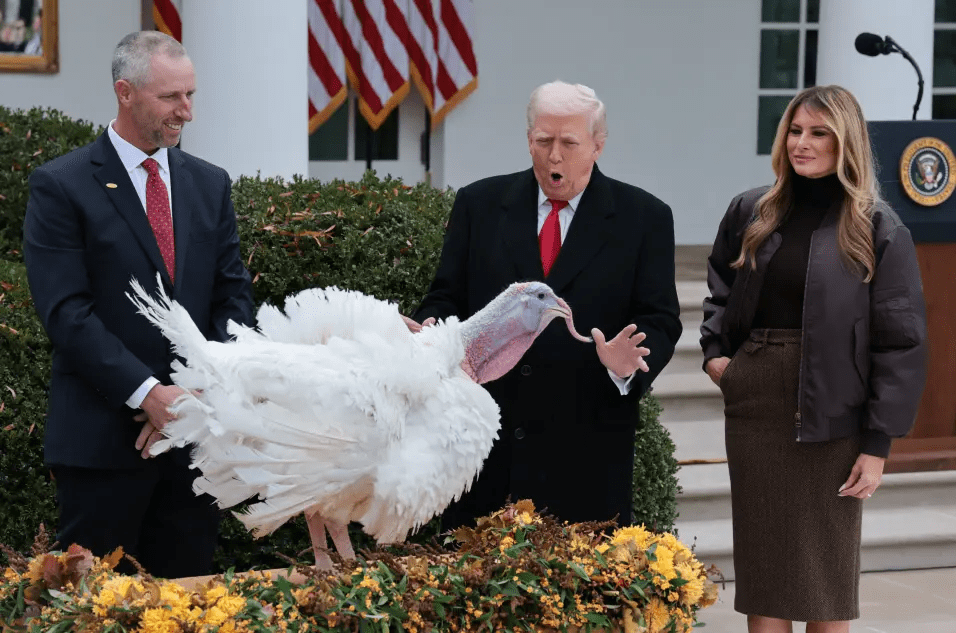
The “Chuck and Nancy” quip came midway, a swift arrow aimed at longtime adversaries Schumer and Pelosi, whose names evoke the bitter congressional battles of Trump’s first term. As Gobble pecked at the hay, Trump leaned into the microphone: “I almost named them Chuck—as in the Senate minority leader—and Nancy, as in the former House speaker. But I would never pardon those two.” The remark, delivered with a wink, elicited a ripple of knowing chuckles from Republican staffers and eye-rolls from a few reporters jotting notes. Schumer, reached later at his New York office, responded with a wry statement: “If pardoning turkeys is the biggest thing on the president’s mind, that’s a Thanksgiving wish come true for the rest of us.” Pelosi, vacationing in California, offered no immediate comment, but her office shared a photo of her with a rescued bird from a prior charity event, subtly underscoring her own affinity for the feathered set. Online, the line exploded—hashtags like #ChuckAndNancy and #TurkeyPardonJabs trended within minutes, with memes blending turkey emojis and Capitol Hill caricatures flooding feeds.
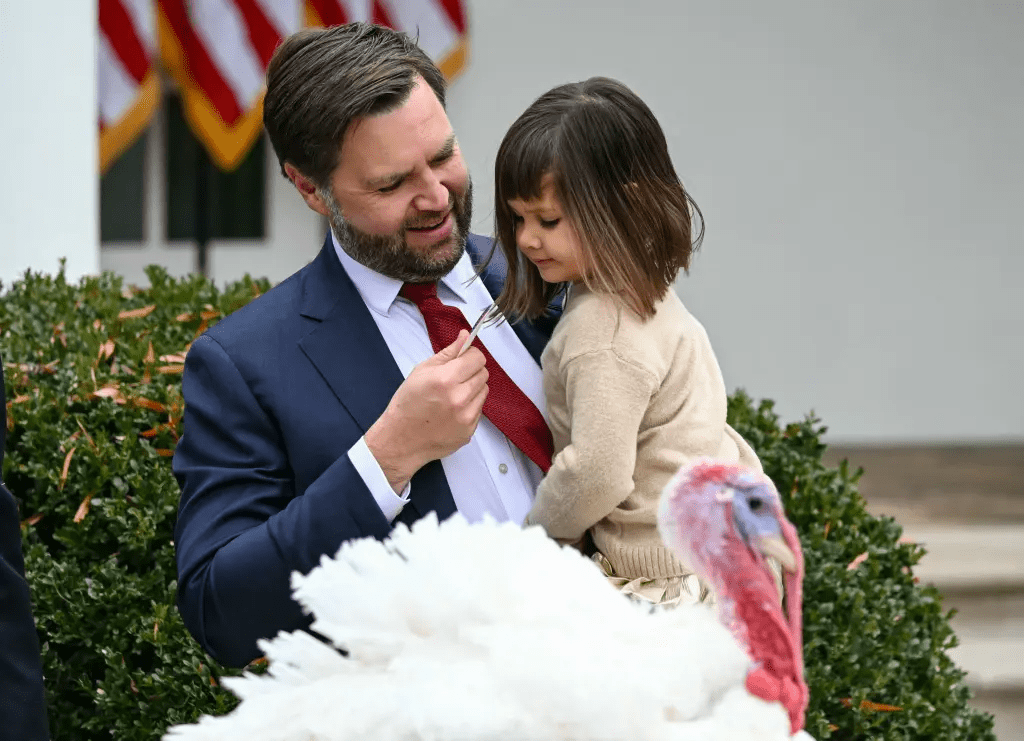
Beyond the barbs, the ceremony touched hearts in quieter ways, highlighting the human threads that bind such traditions. The schoolchildren, from a D.C. public elementary, clutched construction-paper pilgrims they’d crafted that morning, their questions—”Do the turkeys get to vote?”—met with gentle deflections from White House ushers. One girl, wide-eyed as Gobble was lifted for his official pardon, whispered to her teacher about wanting to be president someday “to save all the animals.” For the Sudduth family, the event closed a circle: John’s grandfather had supplied birds for Truman’s era, and now his grandchildren posed with Waddle, their faces alight with pride. Trump, in a rare softer moment, knelt briefly to the children’s level, signing a few programs and sharing a fist bump that drew cheers. As the birds were loaded into a cushioned van bound for a life of retirement at a Virginia farm sanctuary—complete with heated barns and daily foraging— the gathering dispersed, aides buzzing about the soundbites while reporters filed dispatches under the garden’s arching trellises.
Public response unfolded in waves, a tapestry of amusement, eye-rolling, and heartfelt nostalgia that mirrored the holiday’s spirit. On social media, conservatives hailed the re-pardon as “peak Trump—saving birds and scoring points,” with one viral clip of the autopen rant racking up millions of views. Families shared screenshots from living rooms, where grandparents explained the tradition to wide-eyed kids, turning the event into a teachable moment about mercy and history. Progressive voices, meanwhile, critiqued the political detours, with one viral thread lamenting “even turkeys can’t escape the drama,” but many conceded the charm of the core ritual. Late-night hosts previewed segments, while farm families in North Carolina toasted the Sudduths with local brews, grateful for the spotlight on their labor. In a year marked by economic anxieties and policy pivots, the pardon served as a brief unifier—a shared laugh amid the feast preparations, where Gobble and Waddle’s spared fates reminded everyone that grace, however theatrical, has its place at the table.
As the sun dipped low over the South Lawn, Trump retreated to the Oval Office, the echoes of gobbling laughter fading into the evening. For Gobble and Waddle, their adventure was just beginning: a quiet life of pecking at corn in pastoral fields, far from the roasting pans they narrowly escaped. In sparing them—and cheekily resurrecting Peach and Blossom—the president extended a thread of the holiday’s essence: forgiveness, however selective, and the simple joy of second chances. For Americans gathering tomorrow with kin, the ceremony lingers as a whimsical bookmark in a complex year, a moment to savor the absurd alongside the profound, much like the cranberry sauce that binds the meal together.