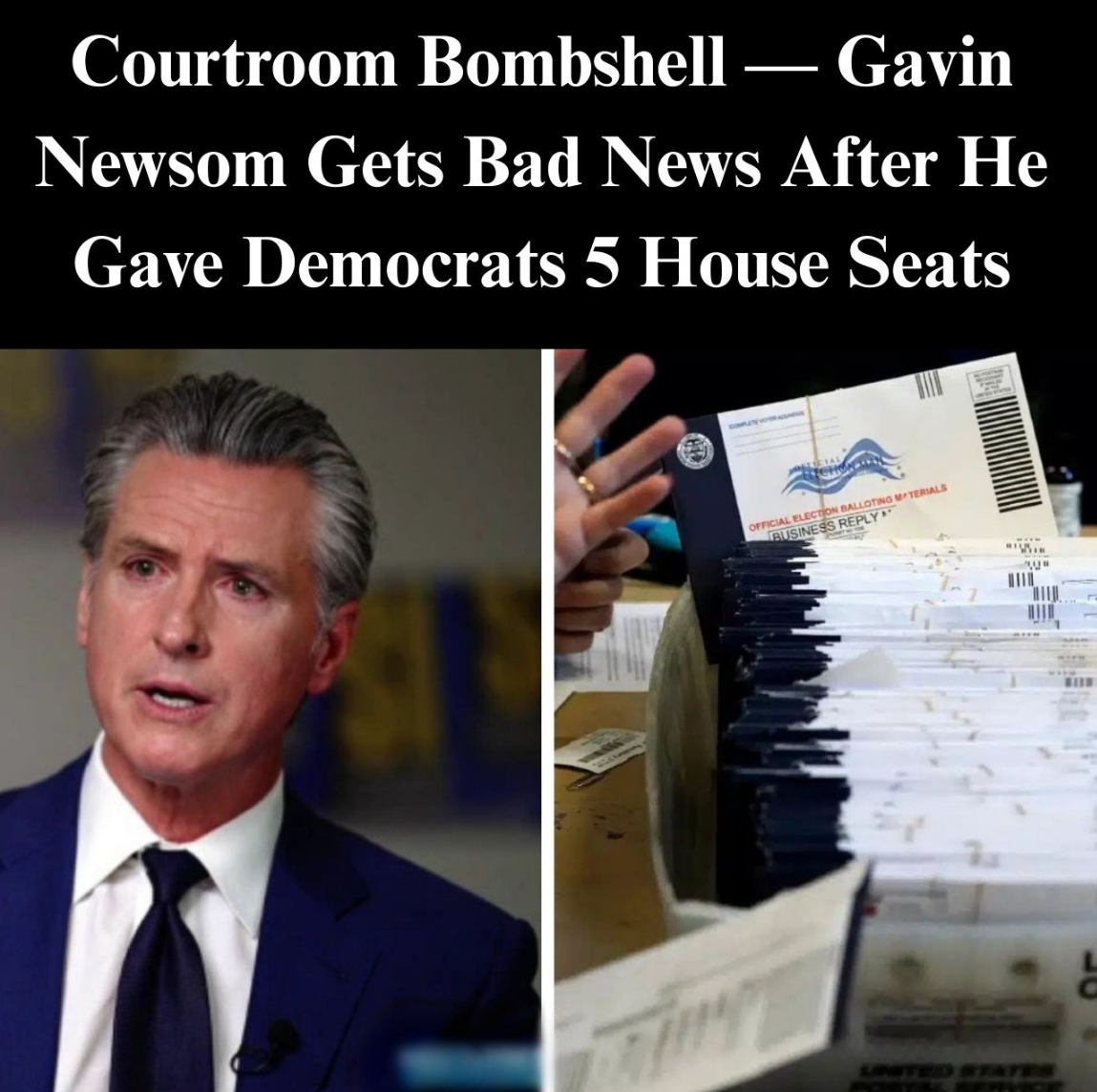

A federal lawsuit challenging California’s congressional redistricting began Monday in U.S. District Court in Los Angeles. The case is being heard in the U.S. District Court for the Central District of California, with Judge Josephine L. Staton presiding, the Center Square reported.
The lawsuit challenges Proposition 50, a ballot measure approved by California voters in the Nov. 4 election. The U.S. Department of Justice is among the plaintiffs contesting the measure, which altered the state’s redistricting process and could allow Democrats to gain up to five additional seats in the U.S. House of Representatives in the 2026 midterm elections.
Proposition 50 was enacted after Texas pursued its own mid-decade redistricting, a move that similarly positioned Republicans in that state to potentially add five House seats. The plaintiffs in the lawsuit are seeking a preliminary injunction to prevent the enforcement of the new district boundaries.
“We want our day in court to make sure we’re making all of our arguments and the people are heard,” Assemblymember David Tangipa, R-Fresno, previously told The Center Square.
“Under the [Voting Rights Act], there are very clear standards,” said Tangipa, one of the plaintiffs in the suit. “I do believe the state of California did not follow those standards.”
Last month, a federal court temporarily blocked Texas’ mid-decade redistricting plan, finding that the Republican-led legislature likely violated federal voting rights laws by redrawing districts in a way that discriminated against voters of color, according to previous reporting by The Center Square. California Democrats, who advanced Proposition 50 through a special election on Nov. 4, have faced similar allegations, the outlet reported.
However, the U.S. Supreme Court later allowed Texas’ new congressional maps to take effect. In a 6–3 decision, the justices said the state was likely to prevail on the merits and criticized lower courts for what they described as significant legal errors in blocking the maps.
In light of the Supreme Court’s ruling in the Texas case, it remains unclear how courts will ultimately rule on the legal challenge to Proposition 50.
“In letting Texas use its gerrymandered maps, the Supreme Court noted that California’s maps, like Texas’s, were drawn for lawful reasons,” Brandon Richards, deputy director for rapid response for the governor’s office, told the Center Square. “That should be the beginning and the end of this Republican effort to silence the voters of California.”
Reports noted in October that the effort to pass Prop 50 was one of the most expensive in California history.
The campaigns for and against Gov. Gavin Newsom’s Proposition 50 have raised more than $215 million as of October 2, including over $100 million in September alone — making it the third most expensive ballot measure in California over the past decade.
Only Proposition 22 in 2020, which sought to redefine the employment status of rideshare drivers, and Proposition 27 in 2022, which aimed to legalize online gambling, have drawn higher campaign spending, CalMatters reports.
The campaign in support of Proposition 50, led by Governor Gavin Newsom, has raised more than $138 million, according to state filings. Roughly $49 million, or about 40% of that total, came from small donors contributing less than $100 each, with most of those contributions reported by the House Majority PAC.
Five major donors collectively contributed just over $25 million to the effort, CalMatters noted. Per the outlet, they are:
- $10 million: House Majority PAC, a SuperPAC focused on electing Democrats to Congress;
- $10 million: George Soros’ Fund for Policy Reform, which focuses on drug policy and electoral reform, according to IRS filings;
- $6.9 million: MoveOn.org, a liberal grassroots organization;
- $3 million: The California Teachers Association, a powerful union with close ties to Democrats;
- $3 million: The National Education Association, the largest teachers union in the country that gives overwhelmingly to Democrats.
Newsom also transferred $2.6 million from his 2022 reelection campaign to support the “Yes” effort. According to a CalMatters analysis of data from the California Secretary of State, more than 68,000 individual contributors have donated to the campaign, the outlet reported.