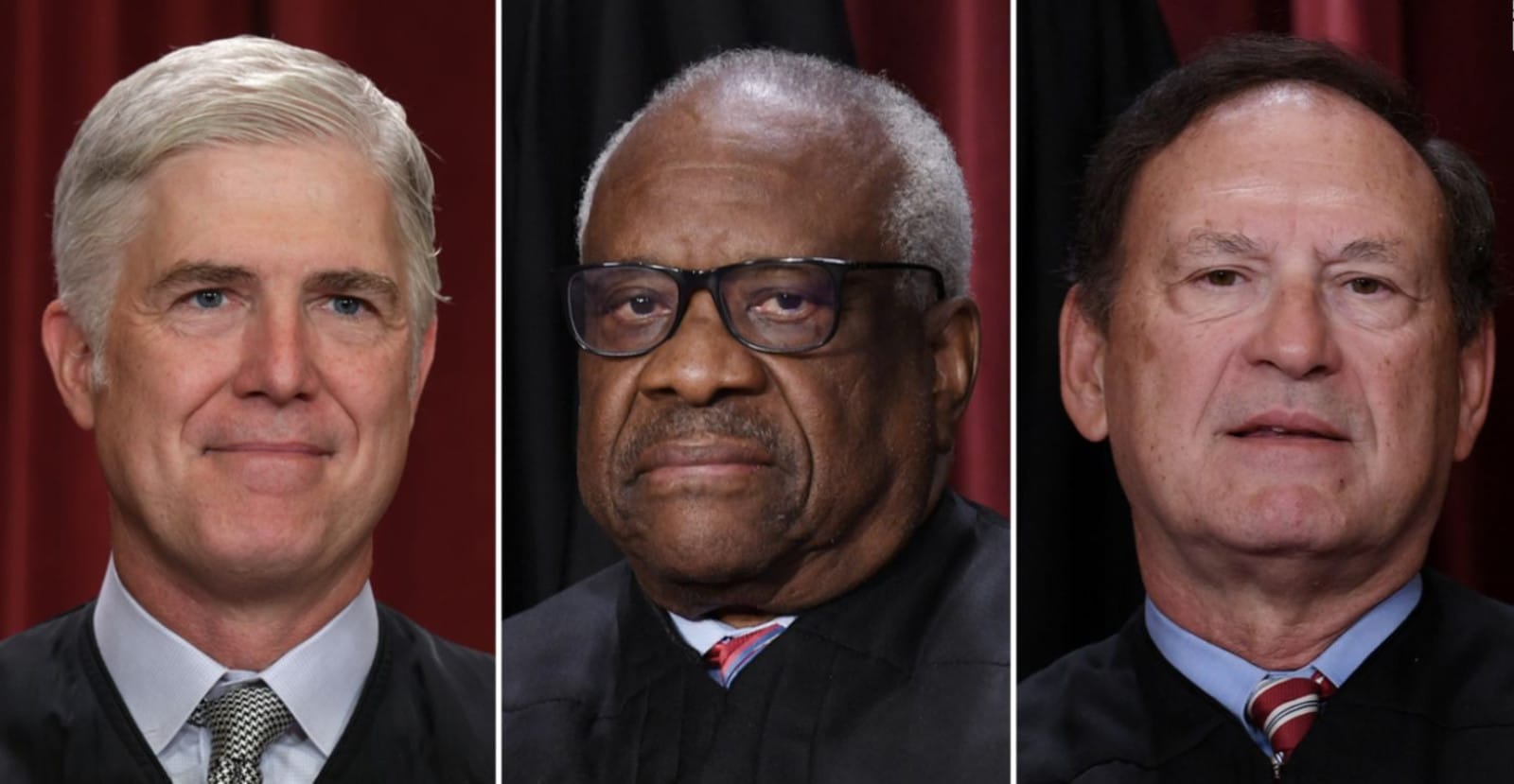
The U.S. Supreme Court has ruled in favor of a delivery driver’s effort to expand the list of interstate commerce employees who are exempt from mandatory arbitration of legal disputes beyond those who work for transportation companies.
In a unanimous 9-0 decision, the justices overturned a lower court’s ruling that dismissed Neal Bissonette’s proposed class action lawsuit.
Bissonette is employed as a delivery driver for LePage Bakeries on Park Street, a division of Flowers Foods, the manufacturer of Wonder Bread. Bissonette claims that Flowers Foods treats its drivers more like independent contractors than employees, depriving them of their rightful wages.
Many companies require workers to sign arbitration agreements and claim that individual arbitration is quicker and more efficient than resolving disputes in court. Critics argue that this practice shields companies from accountability for legal violations impacting a significant number of workers.
Exemptions from this rule apply to employment contracts “of seamen, railroad employees, and any other class of workers engaged in foreign or interstate commerce.” Dated back to 1925, the Federal Arbitration Act (FAA) mandates the enforcement of arbitration agreements according to their terms.
“The Supreme Court, in a 2001 ruling, said the exemption applied only to transportation workers. Since then, appeals courts have split over whether that means any worker who transports goods or only those employed by companies that provide transportation services,” the outlet added.
In 2022, the 2nd U.S. Circuit Court of Appeals in New York ruled that LePage’s exemption from transportation services did not apply to his case. This was because his clients were purchasing bread, not transportation.
Bissonette accused LePage of misclassifying drivers as independent contractors, which allowed him to deny them minimum wage, overtime compensation, and other legal protections while they delivered baked goods to retailers.
The Supreme Court made headlines last week after Justice Samuel Alito did not participate in the Court’s consideration or decision on a petition involving President Trump.
In the case MACTRUONG, DMT v. Trump, President of U.S., et al., the Court dismissed the petition for a writ of certiorari, noting that Alito took “no part” in the matter. The Court did not indicate why Alito recused himself or otherwise declined to participate.
The petitioner, identified as DMT MacTruong, has a history of filing lawsuits alleging abuses of power, violations of the 13th and 14th Amendments, and intellectual property theft.
In this case, MacTruong accused President Trump and Vice President JD Vance of “egregious abuse of power, commission of high crimes, misdemeanors, [and] treason,” and sought a court order to “impeach and remove” them from office.
The outlet reported that the Supreme Court dismissed the petition, with Alito not participating and providing no explanation.
The dismissal comes amid broader scrutiny of Alito, who has faced calls to recuse himself from other Trump-related cases as the Supreme Court considers several high-profile matters connected to the Jan. 6, 2021, attack on the U.S. Capitol.
Alito drew attention after reports surfaced that an inverted American flag was flown outside his home on Jan. 17, 2021 — a symbol that, in the aftermath of the Capitol riot, became associated with supporters of former President Trump’s false claims that the 2020 election was stolen.
In written responses to members of Congress, Alito said he did not participate in flying the inverted flag or an “Appeal to Heaven” flag that was also displayed outside his property. He maintained that neither incident warranted recusal under the Supreme Court’s ethics guidelines.
DMT MacTruong claimed in this case, in part, that he had helped Trump avoid impeachment.
“I helped him twice from being impeached. Once, I wrote to him an email telling him in substance to shut up on the scandalous issue of whether he had used campaign funds to pay Stormy Daniels,” he said.
“He did listen but his lawyer Giuliani did not and continued. I wrote another email to Giuliani telling him to shut up also. He finally did and as we all know, the scandal was forgotten,” he added.
The lawsuit also alleged that the president conspired against the plaintiff as part of his broader political agenda.